Leucine Triggers MPS, But EAAs Complete It
Leucine is the anabolic trigger in muscle protein synthesis, but stable isotope trials consistently show the full essential amino acid pool is required for the complete response. Here is what the primary literature actually measured.

Leucine concentration in the blood is the switch that tells the ribosome to start building muscle protein. That much is well established. The mTORC1 pathway senses leucine through the Sestrin2 and CASTOR1 sensor proteins, and when leucine crosses its threshold, protein synthesis rates rise. But the switch is not the whole circuit. Stable isotope tracer studies, in which researchers label specific amino acids with carbon 13 or nitrogen 15 and track their incorporation into new muscle protein, have landed on the same finding repeatedly: leucine initiates the anabolic signal, but without the remaining essential amino acids (EAAs) present as building material, the response is blunted and short lived. A full EAA dose outperforms leucine alone and BCAA only strategies on muscle protein synthesis (MPS) rate measurements. That finding has practical implications for what belongs in a recovery or performance amino acid product, and it is worth unpacking the mechanism precisely.
What the stable isotope literature actually shows
The measurement methodology matters here. Muscle protein synthesis rate, expressed as the fractional synthetic rate (FSR) of mixed muscle protein or myofibrillar protein specifically, is the gold standard endpoint in this literature. Robert Wolfe's group at the University of Arkansas and Stuart Phillips's lab at McMaster have been central to building this evidence base, using tracer dilution and arteriovenous balance techniques in human subjects to quantify how much labeled amino acid ends up incorporated into new contractile protein over a measured time window.
The pattern across those studies is consistent. When leucine is ingested alone or as part of a BCAA mixture without the other EAAs, the mTORC1 pathway is activated and a brief elevation in MPS occurs. But the elevation is attenuated compared to a full EAA dose providing the same leucine content, and it falls off faster. The mechanistic explanation is straightforward once you think about what synthesis actually requires: mTORC1 can signal the ribosome to build, but the ribosome cannot incorporate amino acids that are not present in the intracellular pool. Histidine, lysine, methionine, phenylalanine, threonine, tryptophan, and valine are all conditionally rate limiting depending on which one is scarcest relative to the synthetic demand leucine just triggered. If any one of them is absent in adequate quantity, the translation process stalls downstream of the signaling event. Leucine pulls the trigger. The other EAAs load the chamber.
This is also why BCAA supplementation in isolation has produced inconsistent results across resistance training trials measuring lean mass outcomes. The signaling is real; the substrate supply is incomplete.
The dose range the trials used
The human stable isotope trials that established the full EAA superiority story typically used EAA doses in the range of 10 to 40 grams, with leucine content within that mixture generally running between 1.7 and 3.5 grams to reliably clear the leucine threshold. The important variable is not just the leucine dose in isolation but the total EAA matrix surrounding it. Trials using 10 to 20 grams of a balanced EAA mixture consistently produced FSR elevations that leucine only and BCAA only conditions at matched leucine doses did not match. The dose range used in those foundational trials is the range a well formulated EAA product should target to reproduce the conditions under which the literature found its signal.
Timing adds another dimension. The acute MPS response to an EAA dose peaks within roughly 60 to 90 minutes of ingestion in human tracer studies and returns to baseline within two to three hours. That time course is why intra workout and immediate post workout timing windows matter: muscle protein turnover is accelerated by resistance exercise, and the anabolic window during which additional EAA substrate drives a larger FSR response is real, if not as narrow as early sports nutrition advice suggested.
Genetics enters the picture: not everyone starts from the same place
One dimension of the EAA response that the acute MPS literature does not always surface is how much inter individual variation in metabolic efficiency shapes the baseline from which supplementation operates. A million person human genetics study identifying rare FNIP1 mutations associated with favorable cardiometabolic profiles illustrates the point concretely. The FNIP1 protein interacts with AMPK and the mTORC1 pathway through folliculin, placing it directly in the signaling network that leucine activates. Individuals with certain FNIP1 variants showed dramatically lower cardiometabolic disease risk in this massive genetics study, and experimental follow up confirmed that the mutations produced meaningful differences in metabolic efficiency. The implication for EAA biology is not that FNIP1 status determines whether amino acid supplementation works, but that the anabolic signaling cascade leucine engages sits inside a metabolic network that varies genetically between individuals. The acute FSR response measured in population level tracer studies is an average. The actual response in any given person depends on the efficiency of their mTORC1 and AMPK signaling architecture.
This is the same argument that the personalized approach to vitamin D optimization rests on in the micronutrient literature: genetics, body composition, cofactor status, and baseline levels all interact to determine how much an individual responds to a given dose of a given compound. For EAAs, the leucine threshold itself varies somewhat by age and muscle mass, and the other EAAs that become rate limiting downstream will differ based on an individual's dietary pattern and protein intake from whole foods. Population level trial findings give us the dose range and the mechanistic frame. Individual response fills in the specifics.
The firefighter study and what intense physical stress reveals about amino acid demand
Most of the MPS literature was built on resistance trained adults performing acute exercise bouts under controlled laboratory conditions. It is worth asking whether the same EAA demand picture holds under sustained, high metabolic load conditions more representative of occupational or endurance contexts. A Journal of the International Society of Sports Nutrition trial examining carbohydrate electrolyte solutions during simulated firefighting exercise offers a useful data point from an extreme end of that spectrum. Firefighting involves prolonged submaximal to high intensity effort under heat stress, with substantial sweat loss and a continuous demand on both aerobic metabolism and skeletal muscle integrity. That trial focused on hydration and recovery outcomes, but the physiological context it describes, sustained exertion under thermal load, is exactly the condition under which muscle protein breakdown accelerates and the demand for exogenous EAA substrate rises most sharply. Sweat contains amino acids in small but non trivial amounts, and the muscle damage that accumulates during prolonged physical work increases the rate at which EAAs need to be resupplied to sustain a positive net protein balance. The hydration and EAA supply problems are coupled: a dehydrated athlete or worker has compromised blood flow to muscle tissue, reducing amino acid delivery to the synthetic machinery even when EAA intake is adequate.
The data provenance problem: a lesson from a completely different field
Here is an angle on the EAA literature that does not usually appear in sports nutrition writing, but that turns out to be mechanistically relevant to how we interpret the research itself. A Nautilus investigation into the online trade in mummified human remains describes a problem that at first seems entirely unrelated to amino acids: when biological specimens of unknown provenance are commercially distributed, the health and safety information that would be needed to handle them properly is missing. The pathogens, the chemical preservatives, the exact tissue composition are all unknown because the chain of custody has been broken. The specimen looks definable but its actual properties are not traceable to a source that can be interrogated.
The parallel to amino acid product formulation is more than decorative. Many BCAA and EAA products on the market list ingredient amounts without specifying the source protein from which the amino acids were derived, the purification process, or whether the leucine content was confirmed by independent assay or taken from the manufacturer's certificate of analysis for the raw input. The FSR signal that the Wolfe and Phillips tracer studies measured was generated with pharmaceutical grade labeled amino acids under rigorously controlled conditions. When a consumer EAA product is made from a fermentation derived amino acid mixture sourced through a supply chain that a buyer cannot directly trace, the provenance of the biological material producing the claimed dose is genuinely uncertain. That uncertainty does not mean the product is ineffective. It means the gap between the trial conditions and the retail product is larger than the label suggests. The mummy's curse, in this reading, is the loss of origin information that makes any biological material harder to trust than it appears.
What proprietary data walls do to the evidence base
The EAA research base is unusually strong by supplement standards, but it is worth noting a structural problem that limits how quickly that evidence base can be extended and refined. Much of the most detailed amino acid kinetics data sits inside proprietary pharmaceutical and food industry research programs that are not publicly accessible. The academic tracer studies that built the leucine threshold and full EAA superiority findings were largely run on research budgets at universities, using methods that require specialized mass spectrometry infrastructure and skilled isotope handling. Replicating and extending those studies requires access to that infrastructure and the willingness to publish regardless of commercial outcome.
That context makes relevant an ongoing issue in healthcare data: STAT News reporting on federal scrutiny of Epic Systems for alleged anticompetitive practices around its use of nondisclosure agreements and data access restrictions. The underlying concern in that story, that a dominant platform can restrict the flow of data in ways that slow independent research and reduce competitive transparency, maps onto a pattern the amino acid supplement industry has faced in a different register. When the most detailed kinetic data on amino acid absorption, transporter saturation, and tissue delivery resides in proprietary databases rather than peer reviewed literature, independent researchers cannot build on it and consumers cannot evaluate it. The public tracer literature is the foundation. Its gaps reflect not just funding constraints but the structural incentive that proprietary research programs have to keep kinetic data inside their walls. What reaches the literature is what sponsors chose to publish.
Age, muscle quality, and why the EAA signal shifts across the lifespan
The MPS response to a given EAA dose is not constant across the lifespan. Anabolic resistance, the blunted FSR response to protein ingestion observed in older adults compared to younger adults at matched doses, is one of the most consistently replicated findings in the muscle aging literature. The proposed mechanisms include reduced mTORC1 sensitivity, lower postprandial blood flow to muscle, and a higher threshold leucine concentration needed to trigger the signaling cascade. What that means for full EAA dosing is that older adults likely require a larger absolute dose to achieve the same fractional synthetic rate elevation that a younger adult achieves on less. The clinical trials that have tried to counteract anabolic resistance by increasing leucine content within an EAA mixture, sometimes called leucine enriched EAA formulas, have produced modest positive results in older adult populations compared to formulas with standard leucine ratios.
This is also where the FNIP1 genetics work becomes practically relevant again. If an individual's mTORC1 pathway efficiency is genetically constrained, the leucine threshold at which they will see a meaningful MPS response may be higher than what the population average trial determined. The personalization argument applies here not as marketing language but as a genuine mechanistic reality: the dose that reliably crosses the threshold in a 25 year old trained athlete is not guaranteed to cross it in a 65 year old with metabolic changes to their signaling architecture.
What this means for product design
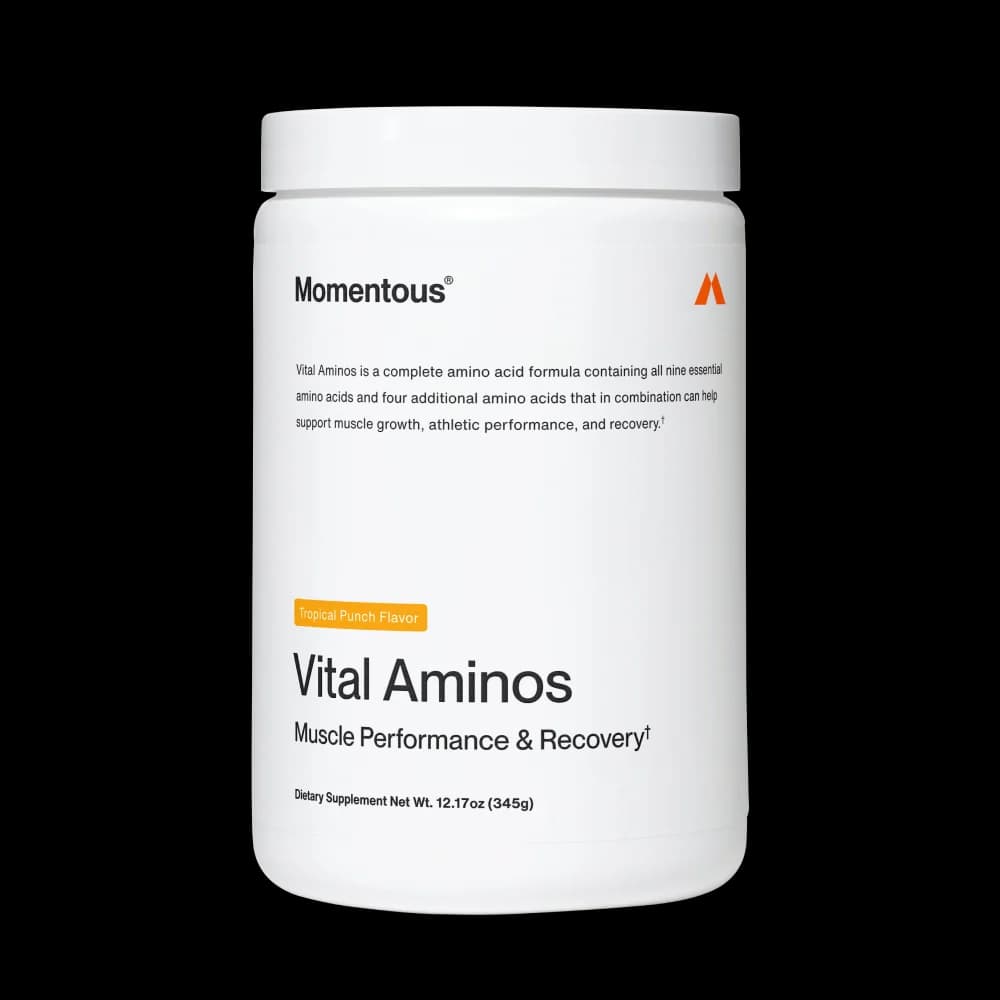
The stable isotope literature produces a specific set of design constraints that a full EAA product should meet to reproduce the conditions under which the human trial evidence was generated. Leucine content needs to be sufficient to cross the mTORC1 activation threshold, generally 1.7 to 3 grams within the serving. The remaining seven essential amino acids need to be present in amounts that do not allow any single one to become limiting against the synthetic demand leucine just signaled. The total EAA dose needs to sit within the range that the tracer studies used, roughly 10 to 20 grams for an acute anabolic stimulus.
What the literature does not support is the logic that more leucine alone beyond the threshold produces proportionally more MPS. Once the signaling event is triggered, the rate limiting constraint shifts to substrate availability across the full EAA pool. Stacking additional leucine above the threshold dose without correspondingly increasing the other EAAs is essentially adding more ignition signal to an engine that is already out of fuel on the substrate side. The BCAA products that dominated sports nutrition for a decade and a half were selling the signal without the substrate. The full EAA literature corrected that story. The dose range those trials used is the dose range a formulation should target.
For informational purposes only. These statements have not been evaluated by the FDA. Not intended to diagnose, treat, cure, or prevent any disease. Consult a qualified healthcare professional before starting any supplement, especially if pregnant, nursing, or taking medication.
Products Mentioned
Products from the Paragon catalog related to the topic discussed above.