90 g/hr: The Dual Transporter Fuel Ceiling
Jeukendrup's multiple transportable carbohydrate research moved the endurance fueling ceiling from 60 to 90 grams per hour. Here is what the transporter biology actually explains, and why the 2:1 to 3:1 glucose to fructose ratio is not a marketing ratio.

Somewhere around the mid 2000s, endurance nutrition quietly had its ceiling raised. The old model said gut carbohydrate oxidation topped out near 60 grams per hour regardless of how much you consumed. Jeukendrup and colleagues broke that ceiling open by asking a different question: what if the bottleneck was not gut capacity in general, but a single transporter running at saturation? The answer reshaped how sports drinks, gels, and race day fuel formulas are designed, and it produced the 2:1 to 3:1 glucose to fructose ratio that now appears on endurance product labels worldwide.
Why one sugar maxes out at 60 grams per hour
Glucose enters the intestinal epithelium via SGLT1, a sodium coupled cotransporter that moves glucose and sodium together across the gut wall. SGLT1 is saturable. Feed it enough glucose and it hits its kinetic ceiling, roughly 60 grams absorbed per hour in trained endurance athletes. Everything above that threshold stays in the gut lumen, draws water osmotically, and produces the bloating and distress that distance runners know too well.
Fructose takes a different route entirely. It crosses the intestinal epithelium via GLUT5, a separate facilitated transporter with its own kinetic ceiling independent of SGLT1. What that means in practice is that when you deliver fructose alongside glucose, you are loading two parallel highways instead of one. Neither highway interferes with the other. Total carbohydrate absorption capacity rises because two distinct molecular channels are working simultaneously.
The ceiling on combined oxidation in human trials landed near 90 grams per hour when the glucose to fructose ratio sat between 2:1 and 3:1. That range is not arbitrary. It reflects the relative transport capacities of SGLT1 and GLUT5 working together. Push the fructose fraction higher and you exceed what GLUT5 can clear, with gastrointestinal consequences. Hold the ratio at 2:1 to 3:1 and both transporters operate near their individual ceilings without either becoming the bottleneck.
What "oxidation rate" actually measures and why it matters
When Jeukendrup's group quantified exogenous carbohydrate oxidation, they used stable isotope tracers, specifically carbon 13 labeled sugars, measured in expired breath. Oxidation rate is the amount of ingested carbohydrate that actually gets burned as fuel, expressed per unit time. It is a stricter and more meaningful metric than absorption rate, because absorbed carbohydrate that accumulates in the liver or remains as gut transit mass is not contributing to power output.
At 90 grams per hour on a 2:1 to 3:1 mix, the tracer studies showed that athletes were oxidizing roughly 1.5 grams per minute from exogenous sources, a meaningful contribution to total energy turnover during sustained work at moderate to high intensity. At 60 grams per hour on glucose alone, the exogenous contribution was roughly 1.0 grams per minute. The 50 percent increase in available substrate is real, measurable, and performance relevant over efforts lasting two hours or more.
Electrolyte dosing: where ACSM and IOC consensus actually lands
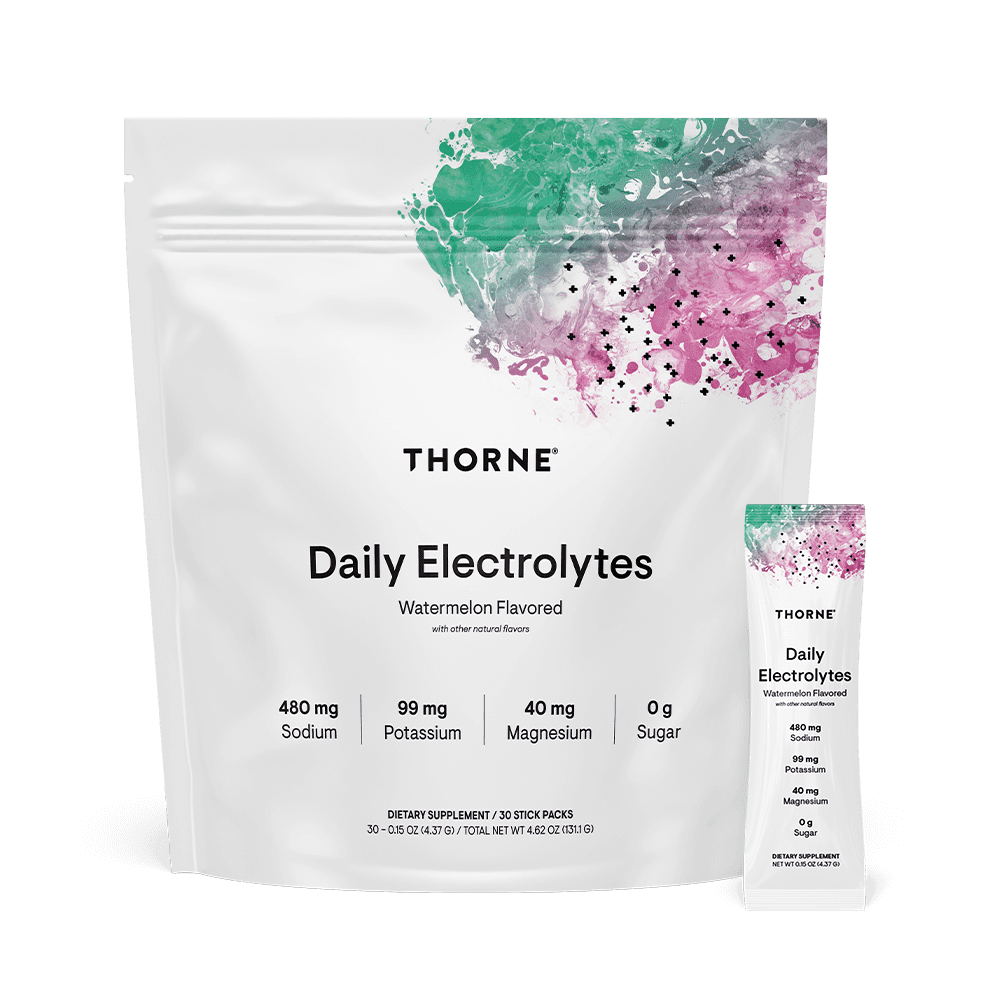
Carbohydrate delivery does not operate in isolation from fluid and electrolyte status. The ACSM and IOC consensus statements on sodium replacement during prolonged exercise both frame sodium not as a performance additive but as a fluid retention and absorption facilitator. Sodium draws water into the gut lumen and then drives cotransport of water alongside glucose via SGLT1. Adequate sodium in a fuel or hydration product supports the same intestinal absorption mechanism that makes the dual transporter carbohydrate strategy work.
The consensus guidance does not prescribe a single sodium dose for all athletes. It sets a range based on sweat rate, exercise duration, and environmental heat load. Longer duration, higher sweat rate, and hotter conditions all shift the recommended replacement upward. The practical formulation implication is that a product designed for events lasting two hours or more needs more sodium per serving than one designed for a one hour training session, not because the branding is different but because the physiology of cumulative sweat loss changes the replacement math.
The equilibrium dynamics angle: a different way to read transporter biology
Here is a conceptual bridge that does not usually appear in sports nutrition writing. Research on how the auditory nervous system achieves microsecond precision in sound localization, specifically work proposing that interaural time differences are represented as stable equilibria of neural population dynamics rather than by classical delay line mechanisms, carries a principle directly relevant to how we should think about dual transporter carbohydrate absorption.
In that auditory model, precision does not come from one fast channel doing all the work. It comes from excitatory and inhibitory interactions across many channels settling toward a stable equilibrium state. The system resolves uncertainty not by speeding up any single element but by distributing the computation across parallel pathways that converge on a stable answer. The result is extraordinary precision from comparatively slow individual components.
SGLT1 and GLUT5 operating in parallel during high carbohydrate fueling work by the same distributed logic. Neither transporter is fast enough on its own to match the substrate demands of a hard two to three hour effort. Together, with the right ratio, they achieve a stable combined throughput that neither could reach alone. The bottleneck in a single transporter system is not a failure of speed; it is a failure of parallel capacity. The dual transporter solution does not speed up SGLT1. It adds a second independent pathway running toward the same destination.
What exercise plasma research suggests about systemic signaling during endurance work
Fueling during endurance exercise is not just a substrate delivery problem. The systemic environment during prolonged exercise is actively changing, and the signals that muscle, liver, and brain receive during sustained effort are not identical to resting state signals. A study published in Medicine and Science in Sports and Exercise examined what happens when plasma from exercise trained donors is administered intravenously to a rat model of neurodegeneration, finding measurable improvements in mitochondrial respiration in the recipient animals. That is an animal model finding, not a human trial result, and the intervention (intravenous plasma transfer) has no consumer supplement analog. But the underlying signal is worth noting: sustained exercise training generates circulating factors that appear to support mitochondrial function in tissues beyond the exercising muscle itself. The fueling choices that sustain high quality long duration exercise matter not just for split times but for the quality of the physiological stimulus being delivered.
How the brain processes novel fueling strategies: a note on representational geometry
There is a less obvious connection worth drawing for readers who have struggled to shift from a single sugar fueling habit to a mixed ratio protocol. Changing an ingrained behavior during exercise, when cognitive load is high and gut sensations are strong, is harder than it looks on paper. Research on how large language models reorganize their internal representations during in context learning, finding that even linearly separable classification tasks vary substantially in how readily an AI system can adapt its representational geometry to solve them, offers an interesting analogy. Not all new patterns are equally easy to integrate, even when they are structurally simple. Athletes who have trained their gut on glucose only fueling for years are, in a loose sense, running a representational problem: the gut itself has adapted (or not adapted) to specific substrate delivery patterns. The training of gut tolerance for higher carbohydrate loads, recommended in the applied sports nutrition literature, is not just about GLUT5 capacity. It is about conditioning the entire gastrointestinal response pattern to a new regime.
Neural rhythm and pacing: a parallel in timing precision
Carbohydrate delivery timing during long events follows a rhythm that experienced endurance athletes develop over many training sessions. The question of how biological systems maintain precise rhythmic output across different frequency demands has a counterpart in computational neuroscience. Work analyzing how recurrent neural networks switch between rhythms across frequency bands found that low frequency rhythms relied on distributed participation across many neurons, while high frequency rhythms were dominated by a small subpopulation of neurons with short time constants. The broader principle is that different pacing or rhythm demands recruit different underlying mechanisms, and that precision at any given frequency requires matching the right substrate to the right architecture. Fueling at 90 grams per hour across a four hour effort is a sustained low frequency problem. Getting that rhythm right requires a delivery architecture (the 2:1 to 3:1 mix) matched to the transport substrate (SGLT1 and GLUT5 in parallel), not a single channel pushed beyond its capacity.
The formulation reality: what 3:1 means in a product
A 3:1 glucose to fructose ratio sits at the upper end of the well tolerated range from the Jeukendrup trials, delivering the highest total oxidation rate with the smallest increment of additional gastrointestinal risk compared to ratios closer to 2:1. In practice, glucose sources in endurance products include maltodextrin (a glucose polymer that hydrolyzes rapidly in the gut) and dextrose. Fructose sources include crystalline fructose and sucrose, which is a 1:1 glucose to fructose disaccharide that contributes to both the glucose and fructose pools simultaneously.
A product built around maltodextrin and sucrose can achieve a 2:1 ratio without listing pure fructose as a separate ingredient. One built from maltodextrin and added fructose can target 3:1 more precisely. The ratio that appears on the label, or that can be calculated from the ingredient list, is the variable that determines whether the product is operating within the dual transporter window or pushing past it into the territory where fructose delivery exceeds GLUT5 clearance capacity.
The "other minds" problem in gut tolerance research
There is one persistent difficulty in translating the dual transporter data to individual athletes. The human trial findings on 90 grams per hour oxidation rates come from trained subjects who had conditioned their guts to higher carbohydrate loads over time. Gastrointestinal tolerance to high carbohydrate delivery is trainable, but the rate of adaptation and the ceiling it reaches vary substantially between individuals. What works for one athlete's gut at 90 grams per hour causes another athlete genuine distress at 60. This is, in a real sense, an empirical version of what philosophers call the other minds problem: the difficulty of knowing from the outside what another system is actually experiencing internally. Formal treatments of that problem, including structural approaches that attempt to characterize subjective experience in terms of mathematical frameworks, acknowledge that an acquaintance gap separates first person experience from any third person description of it. In fueling terms: the tracer studies tell us what the average trained gut can oxidize. They do not tell you where your gut sits in that distribution without individual testing. The 3:1 ratio is a population level finding, not a guarantee that any given athlete will absorb and oxidize 90 grams per hour without issue on race day without prior gut training in training conditions.
Where the evidence sits and what it does not yet resolve
The dual transporter carbohydrate research is among the more mechanistically clean bodies of work in applied sports nutrition. The transporter biology is well characterized, the stable isotope methodology is rigorous, and the human trial data on oxidation rates at different ratios has been replicated. The 2:1 to 3:1 window is not a brand preference. It is the range the transporter physiology supports.
What the literature has not fully settled is the optimal delivery vehicle across different event formats. Gels, chews, liquids, and bars deliver the same glucose to fructose ratio at different gastric emptying rates and with different osmolality profiles. Whether the ratio alone is sufficient or whether delivery vehicle osmolality and concentration interact meaningfully with dual transporter kinetics across event durations beyond four hours remains an active research area. The individual gut tolerance question, and how quickly it can be trained upward in athletes who are starting from a lower baseline, also lacks a definitive answer in the controlled trial literature.
The ceiling at 90 grams per hour is real. Getting your gut to actually reach it consistently, on the right product, in race conditions that differ from training, is where the science meets the individual variation problem that no population level study can fully resolve for you.
For informational purposes only. These statements have not been evaluated by the FDA. Not intended to diagnose, treat, cure, or prevent any disease. Consult a qualified healthcare professional before starting any supplement, especially if pregnant, nursing, or taking medication.
Products Mentioned
Products from the Paragon catalog related to the topic discussed above.