Osteocalcin, GHK-Cu, and the Bone Signal
Osteocalcin circulates as a hormone linking bone to muscle. GHK-Cu shows up in a 2026 diabetic wound hydrogel. Together with collagen peptide immunology and protein language model architecture, a picture of intercellular signaling specificity emerges.

Osteocalcin is not a passive marker of bone formation. That reframe is now well anchored in the human trial literature, and a 2026 systematic review and meta analysis published in Sports Medicine and Health Science maps the quantitative relationship between circulating osteocalcin and skeletal muscle mass across human cohorts with enough granularity to take seriously. The pooled data show a consistent positive association between serum osteocalcin and lean mass indices in adults. That is a human epidemiological finding, not a rodent model. The direction of causality is not settled, but the correlation is robust enough that ignoring osteocalcin when thinking about bone and muscle crosstalk is no longer defensible.
What the osteocalcin signal actually does
Bone has long been treated as a structural depot, a calcium reservoir that responds to mechanical load and hormonal cues. What the last decade of basic research has established is that osteoblasts are also secretory cells sending endocrine signals into the circulation. Osteocalcin is the most studied of those signals. In rodent models, osteocalcin has been shown to bind the GPRC6A receptor on skeletal muscle cells, stimulating glucose uptake and fatty acid oxidation. It also appears to interact with Leydig cells in the testis, influencing testosterone production, and with neurons in the hippocampus, where it has been associated with memory consolidation work in mouse models. We want to be precise: those receptor interaction findings come primarily from genetic knockout and overexpression models in mice. The human trial literature, including the Sports Medicine and Health Science meta analysis, documents the association rather than the mechanism directly. The mechanistic story from rodent biology is the interpretive scaffold; the epidemiology is the signal that makes it worth taking seriously in a human research context.
The practical implication for any investigator tracking musculoskeletal biology is that osteocalcin now belongs in the panel alongside IGF-1, testosterone, and inflammatory cytokines when characterizing the anabolic environment of aging tissue. A bone remodeling rate that looks adequate by DEXA standards may still be producing suboptimal osteocalcin secretion if osteoblast function is compromised, and that secretory deficit could have downstream consequences for muscle that a bone density scan would never reveal.
GHK-Cu enters the wound environment through an engineered scaffold
GHK-Cu, the copper tripeptide complex that has appeared in the dermatological literature since Pickart's original fibroblast work in the 1970s, takes a different form in a 2026 paper in Carbohydrate Polymers. The paper describes a chitosan and oxidized alginate hydrogel incorporating tea plant derived exosomes engineered to address two simultaneous problems in diabetic wound environments: elevated reactive oxygen species and chronic tissue hypoxia. The scaffold also incorporated GHK-Cu as a component of the regenerative architecture. This is an in vitro and in vivo animal model study, and that distinction matters. The findings show that the composite hydrogel promoted collagen deposition and angiogenesis in a rodent diabetic wound model compared to controls. GHK-Cu's contribution to that outcome cannot be isolated cleanly from the exosome and scaffold chemistry, which is a limitation the paper's design does not fully resolve.
What the paper does usefully illustrate is the direction of GHK-Cu delivery research in 2026. The question investigators are now asking is not whether GHK-Cu has fibroblast stimulating properties in a dish (that literature is extensive) but how to deliver it to a compromised tissue microenvironment where hypoxia and oxidative stress are actively degrading the scaffold the peptide is supposed to work within. The exosome integration is particularly interesting from a delivery standpoint: plant derived exosomes carry endogenous antioxidant cargo and cross biological membranes with different kinetics than synthetic lipid nanoparticles. Embedding GHK-Cu in that carrier changes its local bioavailability profile relative to topical application of the free peptide.
Collagen peptides and immune signaling: a mechanism the functional food literature is starting to map
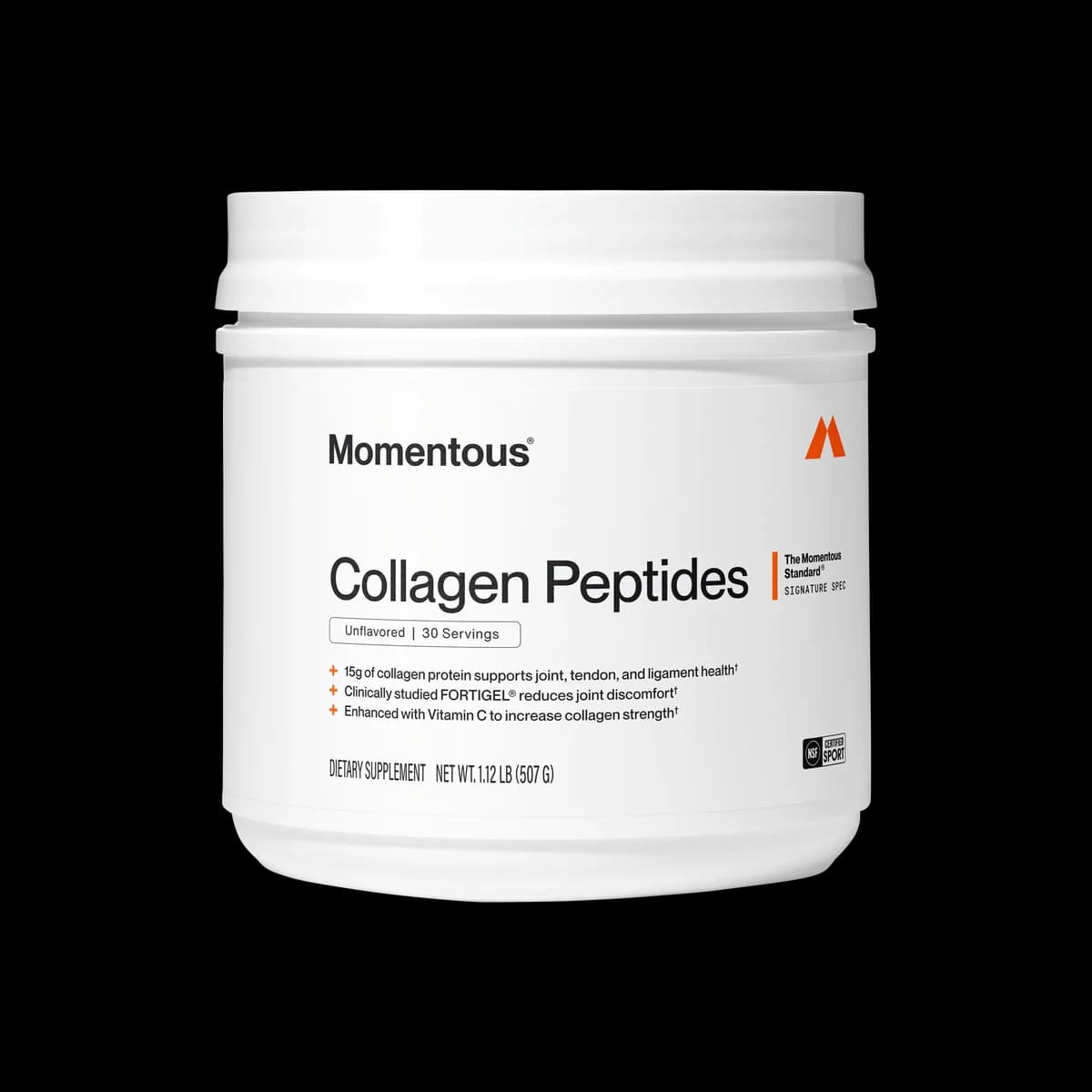
Porcine skin collagen peptides prepared by ultrasound assisted enzymatic digestion are the subject of a September 2026 paper in the Journal of Functional Foods. The paper examines immune regulatory effects of specific peptide fractions, including their influence on macrophage polarization and NF-kB pathway activity. These are in vitro findings in cell culture models. The mechanistic picture that emerges is that short chain collagen derived peptides are not immunologically inert substrates. Certain fractions appear to modulate the balance between pro inflammatory M1 and anti inflammatory M2 macrophage phenotypes in the assay conditions tested. That is a narrow result from a controlled laboratory context and cannot be extrapolated to clinical immunomodulation in an animal or person without additional experimental steps. But it connects to a wider pattern: the bioactive peptide fractions that survive hydrolysis and appear in circulation after collagen consumption are capable of engaging immune signaling machinery, not just serving as amino acid substrate for connective tissue synthesis. The specificity of the peptide fraction matters enormously for which receptor interactions are available. Ultrasound assisted preparation produces a different molecular weight distribution than standard enzymatic digestion, which is part of why the paper's methodology is worth noting rather than treating it as interchangeable with any other hydrolysate study.
Where protein language models enter this conversation
An arXiv preprint examining how protein language models encode task specific information across their internal layers is not a peptide biology paper. But the finding it reports has direct relevance to anyone using computational tools to predict peptide bioactivity or receptor binding affinity. The authors evaluated 13 protein language models across 15 downstream tasks, finding that the final layer embeddings conventionally used for prediction tasks are not uniformly the most informative. For certain task categories, intermediate layers carried substantially richer representations than the output layer. The implication is that a model predicting whether a given collagen fragment will modulate a macrophage receptor, or whether a GHK-Cu variant will bind a copper chaperone protein differently, may be drawing on suboptimal latent space representations if it defaults to last layer embeddings without interrogating which layer is most informative for that specific prediction problem.
This matters to investigators designing computational screening pipelines for bioactive peptide candidates. The field has moved quickly toward using pretrained protein language models as off the shelf encoders, and the architecture assumption baked into that workflow, that the last layer is the right layer, is now empirically questioned. For peptide researchers using these tools to triage candidates before synthesis and in vitro validation, knowing which layer of a given model best captures the structural features relevant to a specific biological task changes the quality of the shortlist.
The signaling specificity problem that connects all four biological threads
What the osteocalcin meta analysis, the GHK-Cu hydrogel paper, the collagen peptide immunology work, and the protein language model architecture study share is a version of the same underlying problem: signaling specificity depends on context in ways that global markers and population level tools routinely miss.
Osteocalcin's association with muscle mass is real in human data, but the receptor biology explaining that association was worked out in mouse knockouts. The translation gap between the two is not acknowledged in most discussions of osteocalcin as a biomarker. GHK-Cu's fibroblast stimulating properties in normoxic in vitro conditions may behave very differently in the hypoxic, high glucose, high reactive oxygen species environment of a diabetic wound, which is exactly why the Carbohydrate Polymers paper chose to engineer a scaffold that addressed those microenvironmental barriers simultaneously rather than testing GHK-Cu in isolation. Collagen peptide fragments that engage macrophage polarization machinery do so with fraction specificity that a generic hydrolysate label obscures entirely. And a protein language model that treats all downstream tasks as equivalent users of last layer embeddings is making a context blind architectural assumption that the arXiv paper now shows is empirically wrong for a meaningful fraction of prediction problems.
The pattern is not that these findings are individually surprising. It is that each one points to the same methodological error: assuming that a well characterized signal in one context transfers cleanly to a mechanistically adjacent but environmentally different one. That assumption is where translation fails. In bone to muscle crosstalk, in copper peptide delivery chemistry, in collagen fraction immunology, and in computational peptide screening, the context specificity is the signal worth reading.
What the California insulin access story adds
We note a sharp contrast with STAT News reporting on California's CalRx generic insulin program, where a well intentioned public access initiative has been slow to reach patients despite policy momentum. The lesson there is a distribution and implementation one: even a compound with an established mechanism, decades of human trial data, and political backing can fail to reach the populations it is intended to serve when the infrastructure between production and delivery is not built carefully. For investigators thinking about how research findings translate to practice, that gap between mechanism, efficacy, and actual delivery is not unique to insulin policy. It is the same gap that the GHK-Cu hydrogel paper is trying to engineer its way around, and the same gap that collagen fraction specificity research keeps exposing between generic products and rigorously characterized preparations.
The question the field still owes an answer to
The osteocalcin and muscle mass association is well documented in human cross sectional data. What remains unresolved is whether interventions that specifically increase osteocalcin secretion, whether through mechanical loading, specific nutritional signals, or peptide related pathways, produce measurable downstream changes in muscle mass or function in controlled prospective human trials. The rodent mechanistic work suggests the pathway is real. The human epidemiology suggests the signal is present. The prospective interventional trial that would confirm directionality has not been adequately powered and run. That is the next paper worth looking for in this literature.
For laboratory research use only. Not for human or veterinary use.
Products Mentioned
Products from the Paragon catalog related to the topic discussed above.