Joint Stack Dosing: What Each Pathway Costs
Glucosamine sulfate, chondroitin, Boswellia, and Meriva curcumin each hit a distinct biological target in joint tissue. The honest question is not whether to stack them but what the dose logic behind each ingredient actually requires.

Glucosamine sulfate at 1500 mg per day shows up in randomized controlled trials on knee comfort going back more than two decades. Chondroitin at 1200 mg per day has a similarly long and similarly contested record. Boswellic acids have controlled trial data at 100 to 250 mg per day. Meriva curcumin phytosome has its own human trial evidence on WOMAC scores and C reactive protein. What we want to examine here is not whether these compounds work independently. It is what their specific dose requirements reveal about the underlying biology, and why the multi pathway logic only holds when each ingredient reaches the tissue concentration its trial record was built on.
The structural substrate argument for glucosamine and chondroitin
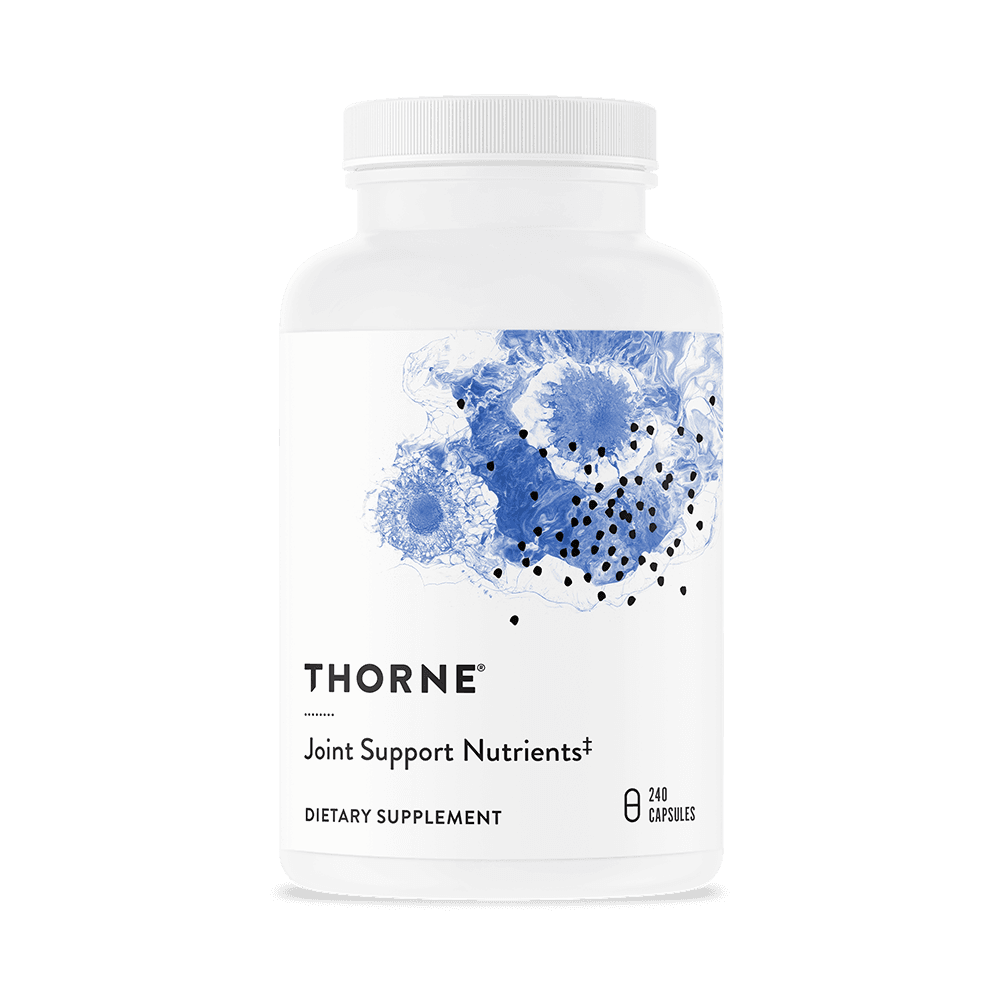
Glucosamine is a hexosamine sugar that chondrocytes use to build glycosaminoglycan chains, the long repeating polysaccharide structures that give cartilage its ability to absorb and distribute compressive load. The proposed mechanism behind supplementation is substrate repletion: when circulating glucosamine is limiting, the chondrocyte's ability to synthesize new extracellular matrix material is constrained. The sulfate salt form carries the most consistent trial record. The GUIDE trial, a randomized controlled trial comparing glucosamine sulfate to acetaminophen and placebo in knee osteoarthritis, found statistically significant improvements in WOMAC pain subscale scores at 1500 mg per day. Effect sizes are modest and between trial variability is real, but the 1500 mg dose is not a round number chosen for convenience. It is the dose at which the controlled trial literature reliably found a signal.
Chondroitin sulfate is itself a glycosaminoglycan, one of the structural molecules that glucosamine helps construct. In human trials including the large NIH funded GAIT study, chondroitin at 1200 mg per day showed its clearest signal in the subgroup of participants with moderate to severe baseline knee discomfort rather than across the full population. That subgroup specificity is worth taking seriously. It is consistent with a substrate repletion model in which benefit concentrates where tissue degradation and turnover are already meaningful. For people with healthy cartilage and no measurable joint changes, the signal in the literature is weaker, not because the mechanism is wrong but because the deficit driving the intervention may not exist.
Why Boswellia targets a completely separate cascade
The boswellic acids in standardized Boswellia serrata extract, particularly acetyl 11 keto beta boswellic acid (AKBA), inhibit 5 lipoxygenase (5 LOX), the enzyme that converts arachidonic acid into proinflammatory leukotrienes. This is mechanistically distinct from the COX pathway that NSAIDs target, and distinct from anything glucosamine or chondroitin is doing. Leukotrienes contribute to the inflammatory environment in joint tissue through a different arm of the arachidonic acid cascade, which means Boswellia is not redundant with the structural substrate compounds. It is addressing a different upstream event. Human trials at 100 to 250 mg per day of standardized extract have measured outcomes including joint comfort scores and walking distance in knee osteoarthritis populations, with several randomized controlled trials showing statistically significant separation from placebo within 30 to 90 days.
The dose logic here is different from glucosamine and chondroitin. Rather than substrate repletion, the operative mechanism is enzyme inhibition, and the potency of that inhibition depends on the concentration of AKBA reaching the relevant tissue compartment. Products that are not standardized for AKBA content cannot reliably reproduce the outcomes from trials that were. The milligram number on the label means very little without knowing the standardization.
Meriva curcumin and the multi node signaling problem
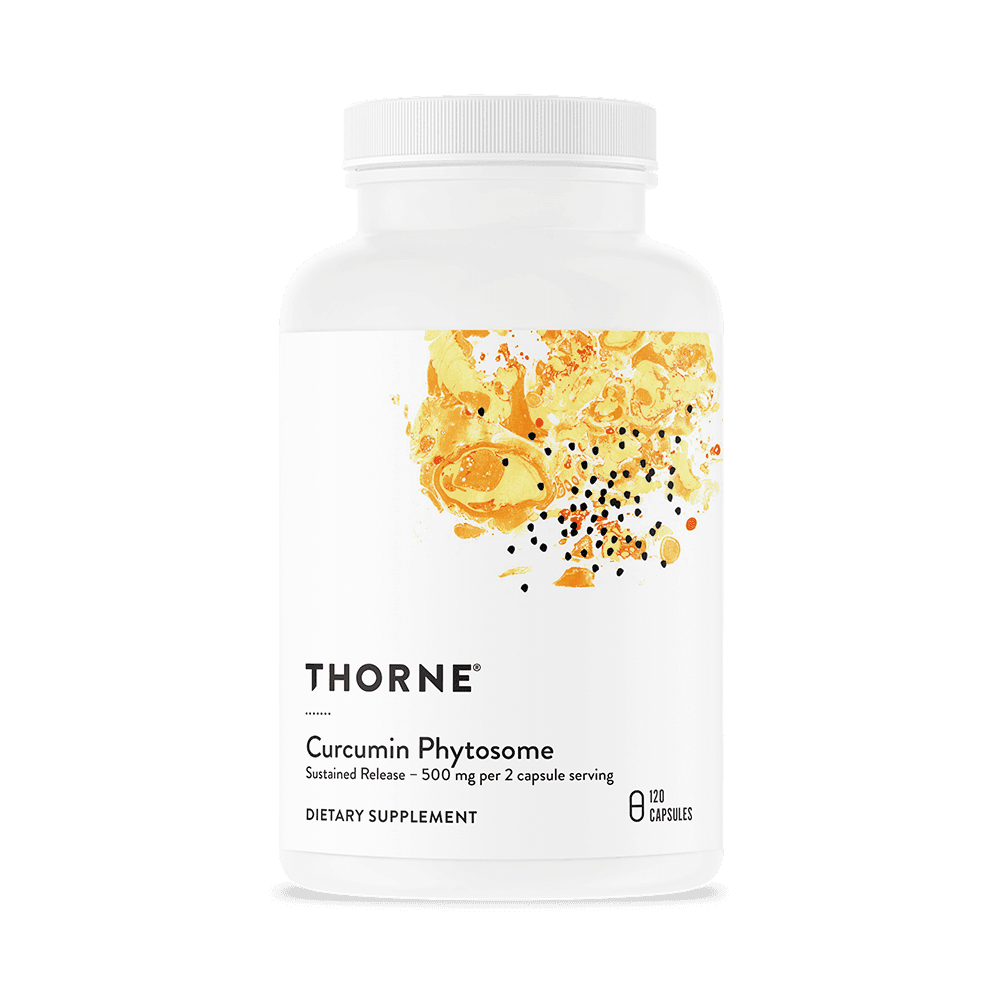
Meriva curcumin phytosome addresses NF-kB driven cytokine transcription and COX 2 expression simultaneously, which means it is working on a third mechanistically independent pathway from Boswellia's 5 LOX inhibition and the structural substrate work of glucosamine and chondroitin. A randomized controlled trial in adults with knee discomfort using 1000 mg of Meriva daily over eight months reported statistically significant reductions in WOMAC scores and in circulating C reactive protein, along with improved timed walking distance compared to placebo. Those are validated human trial endpoints, not in vitro surrogate markers.
The dose logic for Meriva is tied to its pharmacokinetic profile. Unformulated curcumin is aggressively metabolized before it clears the gut wall and liver, producing plasma concentrations too low to register in most assays at practical oral doses. The phosphatidylcholine complex in Meriva changes the compound's solubility behavior at the gut interface, increasing the fraction of intact curcumin reaching systemic circulation. Human pharmacokinetic comparisons have reported plasma concentrations roughly 29 times higher for Meriva against standard 95 percent curcuminoid extract at matched doses. That multiplier is the reason the dose number for Meriva cannot be borrowed from unformulated curcumin trials.
What protein dynamics reveal about joint tissue architecture
Here is a perspective on joint biology that does not usually appear in supplement writing. Research using time resolved infrared spectroscopy combined with nonequilibrium molecular dynamics simulations has established that protein function in allosteric systems is encoded in localized networks of coordinated inter residue contacts rather than in global conformational changes. The key finding is that communication between distant structural elements of a protein travels through specific contact networks, and that local molecular motions are the actual carriers of the dynamic information. This has direct relevance to cartilage biology. The extracellular matrix of cartilage is not simply a static scaffold. It is a dynamically organized protein and glycosaminoglycan network whose mechanical properties emerge from the spatial arrangement and conformational behavior of its components. Enzymatic degradation of that matrix by matrix metalloproteinases and aggrecanases does not just remove material. It disrupts the contact network architecture through which mechanical force is transmitted and dissipated across the joint surface. Glucosamine and chondroitin supplementation addresses the substrate side of that network maintenance problem. Boswellia and Meriva address the inflammatory signaling environment that determines how aggressively those degradative enzymes are expressed. The contact network that protein dynamics research describes is exactly the system that all four ingredients are trying to sustain from different angles.
The scaling argument: why joint tissue cannot simply be bigger
There is a structural biology angle here borrowed from an unexpected direction. MIT Press Reader analysis of why scaling a body larger requires disproportionate anatomical changes explains that compressive load on skeletal and cartilaginous tissue rises faster than body mass as size increases. Cartilage must become disproportionately thick and architecturally reorganized to handle the non linear increase in joint surface stress. The same physics applies within the range of normal human body mass: heavier individuals place cartilage under compressive demands that scale non linearly, which is precisely why the controlled trial literature on glucosamine and chondroitin consistently finds stronger signals in populations where joint tissue is already under measurable stress. The physics of load and cartilage compression explain why substrate availability and inflammatory modulation are not equally urgent at every body composition and activity level. The intervention is most consequential when the tissue is already near its mechanical limits.
Why the combination question is structurally different from the individual ingredient question
The honest read on what the published literature has produced is this: four independent compounds with four independent trial records addressing three mechanistically distinct processes. What has not been produced is a large, adequately powered randomized controlled trial testing all four in combination against individual ingredient arms and against placebo simultaneously. That design would be the cleanest test of whether multi pathway coverage produces additive, synergistic, or simply redundant outcomes. That trial does not yet exist in the published record.
There is a conceptual parallel here from longevity pharmacology that illuminates why the combination question is hard to answer experimentally. Research described at Lifespan.io on a drug combination targeting both senescent cells and cancer simultaneously illustrates why multi target approaches can produce outcomes that single agent studies would not predict. The Conboy group's combination treatment extended the lives of old mice precisely because senescence and cancer represent two interacting biological problems that share upstream drivers. Addressing one without the other leaves a system partially maintained. The analogy to joint tissue biology is not exact, but the logic is the same: when multiple degradative processes converge on the same tissue from independent directions, coverage of only one of them leaves the others uncontested.
What the performance supplement stacking literature contributes to this conversation
We do not often look to the aerobic and anaerobic performance literature for perspective on joint biology, but a systematic review and network meta analysis published in the Journal of the International Society of Sports Nutrition examining combined versus single supplementation of creatine and beta alanine addresses a structurally identical research design problem. The authors pooled data across trials to ask whether a two compound stack produces outcomes that diverge from what either compound achieves individually. Network meta analysis is specifically designed to compare combinations that have not been tested head to head in a single trial, by using indirect evidence across the available trial network. The methodological lesson transfers directly to the joint supplement space. Until a combination trial exists, network meta analysis of the available individual ingredient literatures is the most rigorous tool available for estimating whether combination effects are likely to be additive. The joint ingredient research base is not yet large or standardized enough to support a full network analysis, but the framework is the correct one to apply when the direct comparison trial has not been run.
The access and translation gap that the clinical literature cannot close
One pattern that runs through all of this research is the gap between a mechanistically coherent intervention with human trial data and the practical infrastructure needed to get that intervention to the people most likely to benefit. STAT News reporting on California's low cost insulin program documents how even a well established compound with decades of human trial evidence, a clear mechanism, and policy level support can reach only a fraction of its intended population when the distribution infrastructure between production and patient is not built carefully. The lesson extends beyond insulin access. The joint supplement literature has compounds with real human trial evidence behind them, at specific doses, in specific forms. But if the product reaching a consumer uses an unstandardized Boswellia extract, a non phytosomal curcumin form, or a dose borrowed from a different trial population, the evidence does not transfer. The clinical trial produced its result with a specific ingredient at a specific dose in a specific form. The gap between that controlled condition and what ends up in a capsule on a shelf is where efficacy gets lost. This is not a minor detail. It is the difference between a formulation that reproduces the trial conditions and one that shares a name with the compound that was studied.
Where the dose logic converges
The doses that appear in the joint supplement literature are not conventional. They reflect the minimum systemic exposure at which controlled trials found consistent signals in relevant populations. Glucosamine sulfate at 1500 mg, chondroitin at 1200 mg, Boswellia standardized extract at 100 to 250 mg for AKBA content, and Meriva curcumin at 500 to 1000 mg per day represent the evidence based range. Dropping any one of those below its trial floor does not simply reduce the effect proportionally. It moves the dose out of the concentration range that produced the trial outcome, and the physiological architecture that produced that dose response has a floor below which the mechanism has no access to its target.
Whether those four compounds together produce a measurably different outcome than the best single ingredient from the group is the question the field still owes a direct answer to. The mechanistic rationale for three independent pathways of intervention is coherent. The independent ingredient literatures are each real, if uneven. The combination trial that would settle the stacking question with the kind of evidence the individual ingredient literatures cannot provide is the next paper worth looking for.
For informational purposes only. These statements have not been evaluated by the FDA. Not intended to diagnose, treat, cure, or prevent any disease. Consult a qualified healthcare professional before starting any supplement, especially if pregnant, nursing, or taking medication.
Products Mentioned
Products from the Paragon catalog related to the topic discussed above.