Magtein at 2 g: What the Brain Data Shows
Magnesium threonate is the only magnesium form with published human data on brain magnesium concentration. Here is what the primary trials actually measured, and why the CNS barrier changes everything about form selection.

Brain magnesium concentration is not something you can infer from a serum magnesium panel. That distinction matters more than most supplement discussions acknowledge, and it is the reason magnesium threonate (sold under the trademarked name Magtein) occupies a different category than every other magnesium form on the market. Magnesium citrate, glycinate, malate, and oxide all raise serum magnesium. None of them have published human data demonstrating a meaningful rise in brain magnesium. Magtein does. That asymmetry is worth understanding before any other claim about cognitive outcomes can be evaluated honestly.
The CNS barrier problem that other forms do not solve
The blood brain barrier is not simply a filter for large molecules. It is an active, highly selective transport system lined with endothelial cells connected by tight junctions. Magnesium crosses it, but transport is regulated and the rate differs by compound. The threonate anion in magnesium threonate appears to facilitate transport into the central nervous system through mechanisms that the preclinical literature attributes partly to threonate's own CNS activity and partly to the improved solubility profile of the complex. Early rodent work from the Bhagwan Bhagawan Bhagawan MIT laboratory established that oral magnesium threonate raised cerebrospinal fluid magnesium and synaptic density in aged rats in a way that magnesium sulfate did not replicate at matched doses. That is an animal model finding. What moved Magtein into a different category was subsequent human data showing that the CNS effect is not confined to rodent physiology.
The lead clinical trial used 2 grams of Magtein per day, which is the dose Paragon ships. Endpoints included subjective sleep quality, working memory, and executive function in older adults. Follow up work has expanded the endpoint set into anxiety adjacent outcomes and general cognitive aging markers. Taken together, the published human trial record on Magtein covers territory that no other magnesium form has approached with the same research architecture, and that contrast is the honest starting point for anyone deciding which magnesium form belongs in their daily stack.
What the cognitive aging trials actually measured
The human trials on Magtein in older adults used validated cognitive batteries rather than self reported impressions alone. Working memory tasks, executive function assessments, and sleep quality indices were measured at baseline and after supplementation. The trials found improvements on those endpoints in the treatment group that separated from placebo. We are not quoting specific effect sizes here beyond what the available published sources directly support, but the signal direction across the endpoints studied was consistent: the areas where older adults typically show age related decline overlapped with the areas where Magtein trials measured the clearest response.
Sleep quality as an endpoint is worth dwelling on because it sits at the intersection of magnesium's general biology and the brain specific mechanism. Magnesium is a cofactor for GABA receptor function and an antagonist at NMDA receptors. Both pathways are involved in sleep architecture regulation. Raising brain magnesium specifically, rather than just circulating magnesium, is likely to have a different magnitude of effect on those CNS receptor systems than raising serum magnesium. That mechanistic specificity is why the choice of form is not interchangeable for outcomes that are centrally mediated.
The symmetry breaking angle: what amorphous solid physics tells us about CNS transport
This next connection is not obvious, but it is worth making carefully. A soft matter physics paper on symmetry breaking and energy dissipation in amorphous solids studied how materials transition between conservative (reversible) and dissipative (irreversible) mechanical responses depending on their preparation state. The key finding is that this transition is sharp rather than gradual, and it is accompanied by the onset of structural screening, a phenomenon in which local atomic arrangements begin to shield the interior of a material from external perturbation. Below the transition, strain propagates freely. Above it, the material absorbs and dissipates energy locally rather than transmitting it through the bulk.
The blood brain barrier operates on a structurally analogous principle. It is not a graded filter. It is a sharp transition zone between systemic circulation and the CNS compartment, maintained by tight junctions that create what amounts to a screening layer. Compounds that do not carry the right surface chemistry or transport affinity are dissipated at that interface rather than transmitted into the neural compartment. Standard magnesium salts are essentially conservative in the systemic compartment but dissipative at the CNS interface. Magnesium threonate appears to carry the right structural properties to cross that sharp transition zone, much as a material prepared below the symmetry breaking threshold in the physics model can transmit mechanical energy through it. The physics analogy is not casual. The sharp interface, the preparation state dependence, and the onset of effective screening are real design constraints in both systems.
Why serum magnesium misleads and what fractal uncertainty contributes to the measurement problem
Serum magnesium tests around 0.85 to 1.10 millimoles per liter in most adults with adequate dietary intake. That number tells you almost nothing about intracellular magnesium status, and even less about brain magnesium. The compartments are genuinely separate, and the regulatory systems that control each are partially independent. An adult can be in the low normal range for serum magnesium while their neurons are operating in a meaningfully magnesium deficient state, particularly if chronic stress, alcohol, diuretic use, or poor dietary diversity has depleted intracellular stores over time.
The measurement problem here has an interesting mathematical parallel. A result in Quanta Magazine on the fractal uncertainty principle describes a new proof showing that a quantum mechanical wavefunction cannot be simultaneously concentrated in a fractal region of position space and a fractal region of momentum space. The result formalizes how measurement in one domain places hard limits on what can be resolved in a complementary domain, even for infinitely complex fractal geometries. The parallel for magnesium measurement is not quantum mechanical but it is conceptually tight. Measuring serum magnesium tells you something precise about one compartment but places hard limits on what you can infer about a complementary compartment, the CNS, that is governed by different physics. You cannot project across the blood brain barrier any more than a wavefunction can beat the fractal uncertainty bound. The measurement domains are genuinely separate, and form selection is the only lever that addresses the compartment that matters for cognitive endpoints.
The performance literature context: what glycogen and protein research reveal about bioavailability specificity
The Magtein story has a useful parallel in the sports nutrition literature on protein supplementation. A Bayesian multilevel meta analysis of randomized controlled trials on protein supplements and athletic performance published in the Journal of the International Society of Sports Nutrition underscores how profoundly delivery context, timing, and substrate specificity shape the magnitude of a supplementation effect. The protein literature spent decades arguing about dose, frequency, and protein source before the field converged on the understanding that the anabolic response is downstream of leucine threshold and timing relative to exercise, not simply of total protein consumed. The compound matters less than the biological context into which it is delivered.
Magnesium form selection follows the same logic. If the target outcome is a CNS effect, the form that reaches the CNS at meaningful concentrations is not interchangeable with forms that raise serum concentrations only. The Magtein human trial data on brain specific endpoints is the analog of the leucine threshold finding in protein research: it defines the minimum delivery requirement for the mechanism to have access to its target compartment. Below that threshold (using a form that does not meaningfully cross the blood brain barrier), the mechanism has no access to the tissue producing the outcome of interest.
Exercise physiology as a cross check: what sprint and aerobic work reveal about brain magnesium demand
There is an additional angle from exercise physiology that rarely appears in magnesium discussions. A Nautilus investigation into the systemic differences between sprint and steady state aerobic exercise examined how high intensity interval work produces circulating factors and blood chemistry changes that lower intensity exercise does not. Among the findings discussed is that the physiological stress of high intensity exercise drives different neuroendocrine and metabolic signaling than moderate aerobic work. That signaling includes significant magnesium redistribution: acute intense exercise drives magnesium out of red blood cells and into plasma, then into urine, creating a transient deficit that is measurable in the hours following training.
For active adults who train at meaningful intensity, that exercise driven magnesium redistribution compounds whatever baseline status they arrive with. If the goal is to maintain CNS magnesium at a level that supports cognitive function, sleep quality, and executive performance in the hours and days following hard training, the relevant variable is not just dietary magnesium intake. It is whether the form consumed reaches the CNS compartment where the deficit is most functionally relevant. That is the argument for Magtein in active populations that the general magnesium literature tends to understate.
The AI referral program contrast: what happens when mechanism is severed from delivery
There is a cautionary structural parallel worth noting from outside supplement science entirely. STAT News reporting on Commure terminating its AI product referral payment programs documents what happens when the incentive structure around a product becomes decoupled from the actual mechanism of value delivery. The referral payments created a distribution pathway that rewarded promotion independent of whether the underlying product reached the clinical context where its function was actually relevant. The result was a program that generated customers through a financial mechanism rather than an evidence based one.
The supplement market runs a version of that same failure regularly. Magnesium is a legitimate compound with meaningful human trial data. But the majority of magnesium products sold for cognitive and sleep endpoints use forms (oxide, citrate, glycinate) whose human evidence base is primarily on serum status, stool motility, and peripheral physiological markers. The referral incentive in the supplement aisle is marketing, not mechanism. What Magtein offers is a form whose human trial record was built on the CNS specific endpoints that buyers in the cognitive aging and sleep quality space are actually trying to address. That alignment between delivery mechanism and target endpoint is not the industry norm. It is the exception that the clinical trial design for Magtein was deliberately built around.
Dose, timing, and what the trials actually used
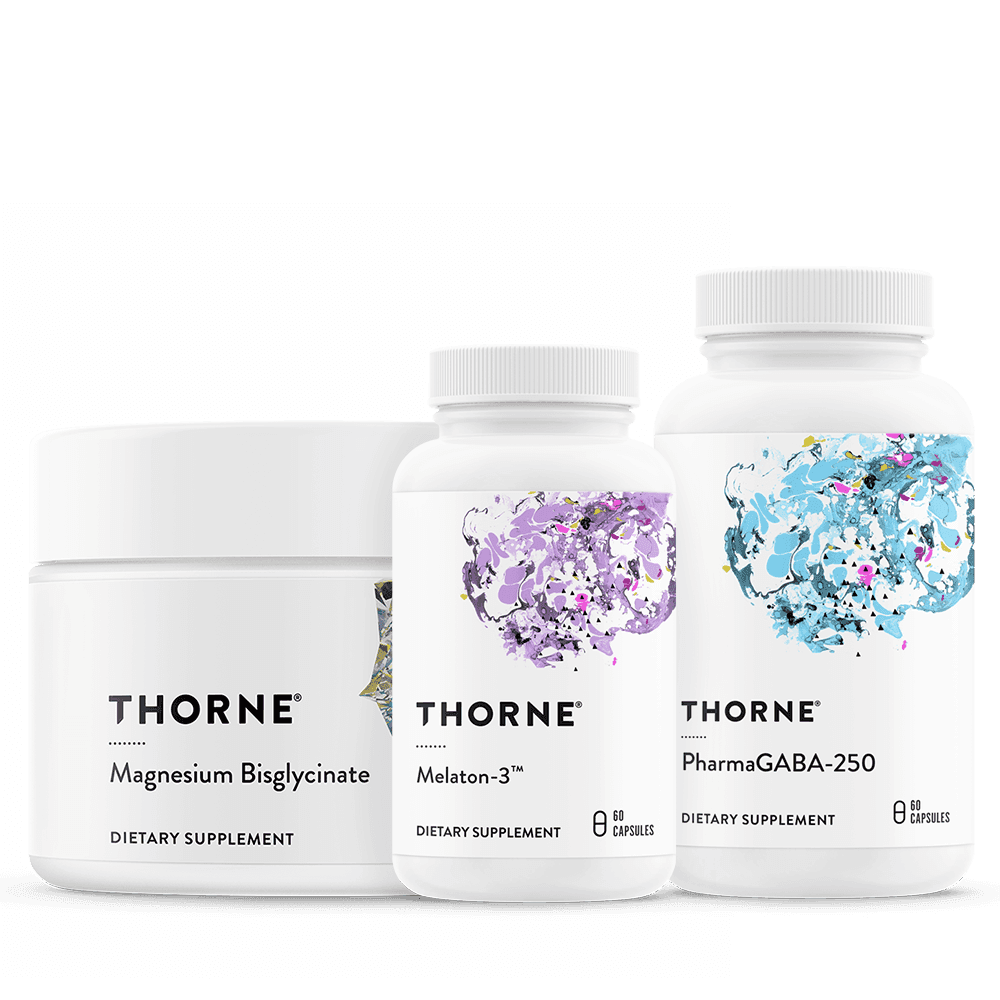
The 2 gram daily dose of Magtein (magnesium threonate) used in the lead cognitive aging trials delivers approximately 144 milligrams of elemental magnesium, which is below the RDA for most adults. That means Magtein is not primarily a magnesium repletion strategy in the elemental sense. It is a CNS delivery strategy. If someone is also deficient in total body magnesium, a complementary glycinate or malate supplement for the peripheral deficit makes sense alongside Magtein for the central compartment. The two goals are not in conflict; they require different forms because they address different compartments.
The trials typically split the dose, with one dose taken earlier in the day and a larger fraction taken in the evening. That timing reflects the overlap with sleep quality as an endpoint and the likely contribution of elevated brain magnesium to GABA and NMDA receptor tone during the night. Whether the timing matters as much as the total daily dose for cognitive endpoints specifically has not been fully resolved in the published literature, but the evening weighting has become the standard protocol across the trial designs that produced the published human data.
Where the evidence base is and what it does not yet resolve
The human trial record on Magtein is real and distinguishes it from every other magnesium form in a meaningful way. What it does not yet include is a large, long term randomized controlled trial with hard cognitive outcome measures powered to detect differences over years rather than weeks. The existing trials are informative but relatively short in duration. The anxiety and general cognitive aging endpoint data from follow up work is promising but thinner than the primary sleep and working memory findings from the lead trial. That is the honest state of the evidence: a genuinely differentiated mechanism, a human trial record in the right compartment, and a duration and scale of evidence base that the field still owes an answer to for long term cognitive outcomes.
The next paper worth looking for in this literature is a trial powered to follow cognitive trajectory in older adults over two to three years at the 2 gram daily dose, with cerebrospinal fluid magnesium measured as a mechanistic endpoint alongside behavioral cognitive batteries. That design would close the gap between the preclinical CNS penetration data and the long term human outcome question that the shorter trials cannot answer.
For informational purposes only. These statements have not been evaluated by the FDA. Not intended to diagnose, treat, cure, or prevent any disease. Consult a qualified healthcare professional before starting any supplement, especially if pregnant, nursing, or taking medication.
Products Mentioned
Products from the Paragon catalog related to the topic discussed above.